
How I started making art with code
I hear this question a lot: "Why make art with code? You could just design it in Illustrator." Sure, I could. But that's not the point.
I don't create to reproduce a pre-planned image. For me, code is a language of expression - one that lets my vision evolve throughout the process. I usually have a general idea, a sense of direction I want to go in, but I never know what the final result will be.
And that's exactly what fascinates me. I start with a small idea, then build it up layer by layer, adding new elements as I go. The results often surprise me - and that's the best part.
I love the moment when the smallest differences and variations produce something unique, something unrepeatable. That's where the essence of the creative process lies for me - not in full control, but in discovery. In the fact that a single piece of code can generate an infinite number of unique works.
But before we go any further - what actually is generative art?
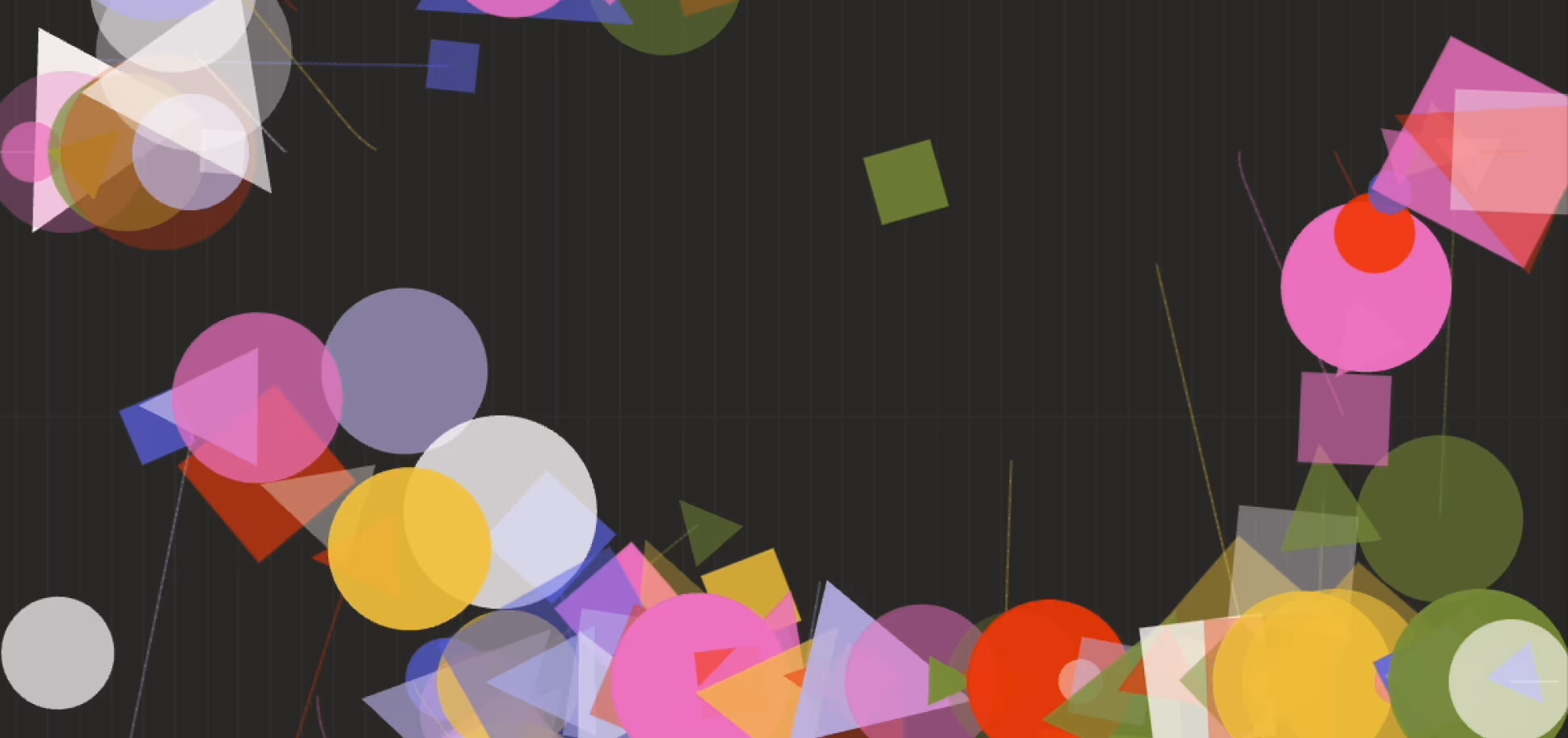
When I first started exploring the intersection of code and art, I was vaguely aware that generative art existed. But honestly, I didn't fully understand it back then. In my head, it boiled down to a simple equation: Generative Art = Randomness.
And sure - randomness is part of it, but only a small part. Over time, I came to understand that generativity is something much deeper: a way of thinking about the creative process, about the relationship between system, artist, and unpredictability. It's also about understanding why something happens - not just that it looks interesting.
For me, the real value of generative art lies in this kind of questioning - asking yourself: Can what I'm making truly be called generative art? What role do I play, and what role does the system play? What would happen if I gave the code even more control?
Early on, I went through many different definitions. Some described generative art broadly - as any creative process based on systems and rules, not necessarily digital. Others focused strictly on computers, algorithms, and code as the primary medium of expression. Both approaches are valid - they simply look at it from different angles.
For my own work and experiments, I've developed my own understanding of generative art, one that combines elements from different sources and my own experience:
Generative art centers on creative coding - creating through code in which the program has a degree of autonomy. It merges decisions made by a system (a set of rules and algorithms) with elements of chance and the artist's creativity, producing unique, unrepeatable visual works.
In my understanding, generativity rests on four pillars:
- A set of rules - the logical foundation of the process. It defines the boundaries and behavior of the system while leaving room for unpredictability.
- The artist's creativity - how I design the rules and parameters. It's my decision where control ends and experimentation begins.
- System autonomy - the moment when the code starts acting on its own, generating effects I didn't plan for.
- Randomness - the element that gives the work character and life. Thanks to randomness, every outcome is different, and therefore unique.
What does my process look like?
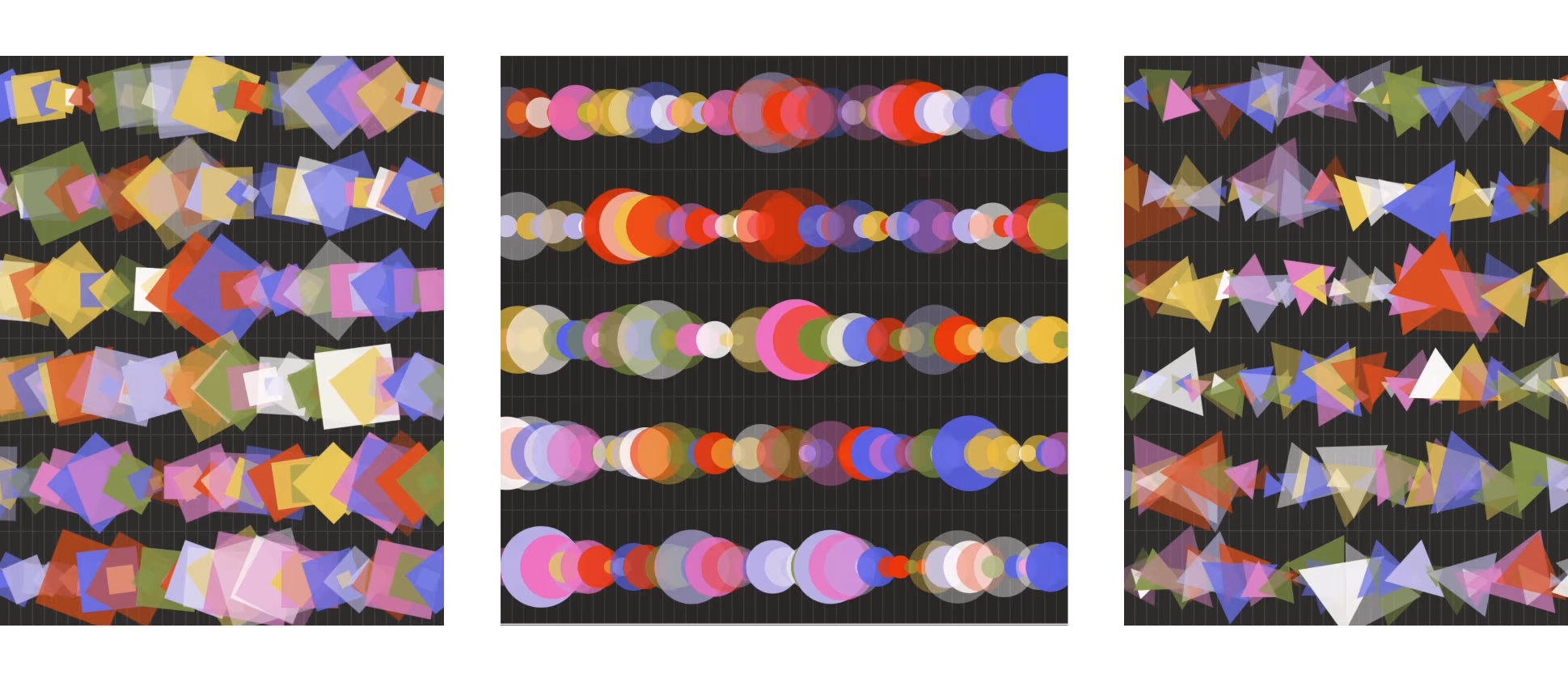
In my experiments, the starting point is often a grid - I treat it as a base element, the structure from which everything begins. A simple layout that I gradually transform into something far more organic.
- I usually start by creating a dynamic grid that responds to parameters and changes over time.
- Then I add basic shapes - points, lines, rectangles - which form the first layers of the composition.
- Next comes the experimentation with transformations: scale, opacity, rotation, and color.
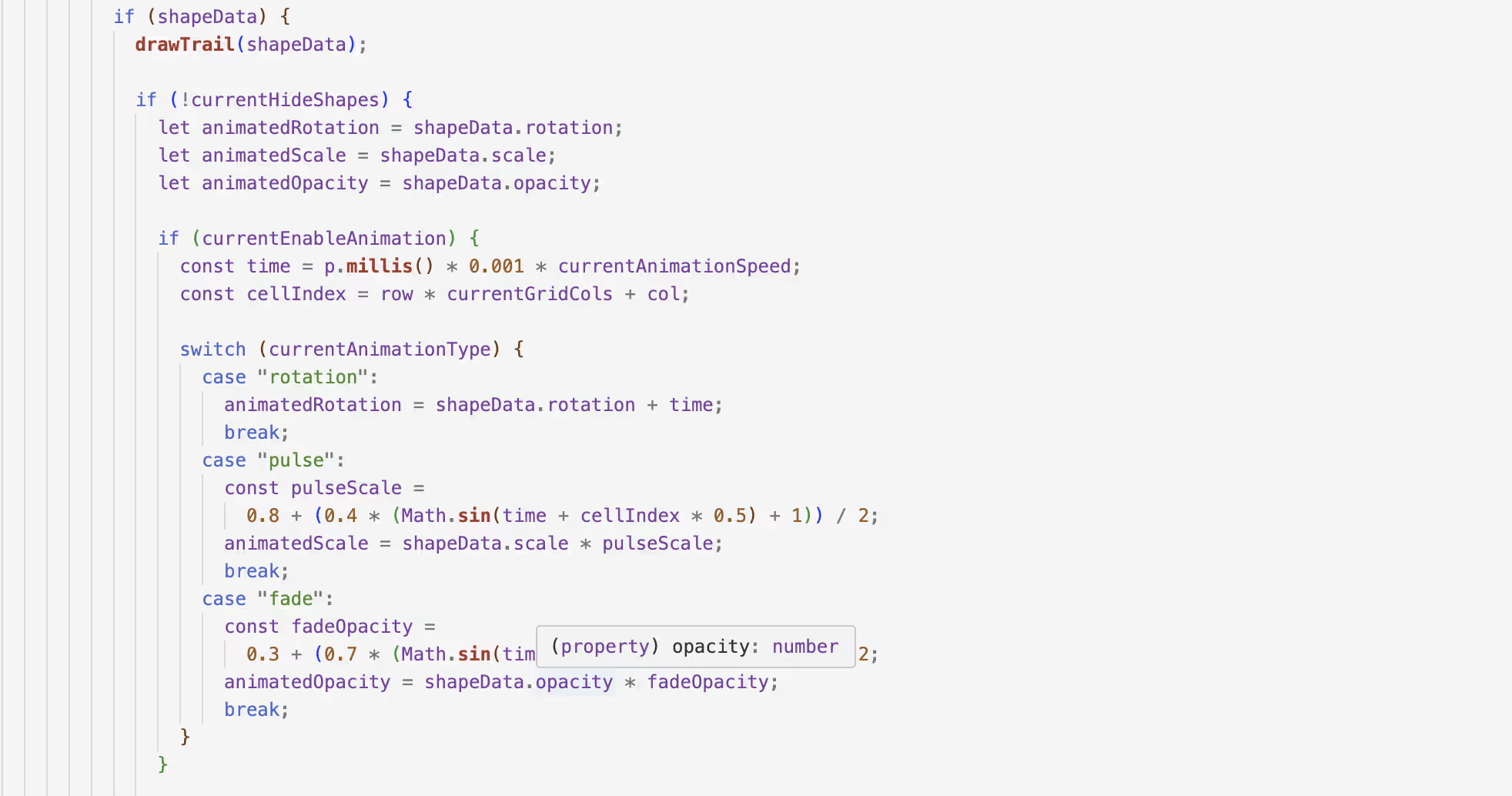
- Then I introduce motion - pulsing, wave effects, rotation, or repeating sequences - and the whole thing gains energy and lightness.
- Finally, I tweak the parameters, observing how even the smallest changes affect the entire layout.
This is the most exciting part for me - when the code starts responding to my decisions and generates something I didn't anticipate. That's when I feel like I'm in a dialogue with the system, not just controlling it.
What if I take it a step further and add motion?
Sometimes I like to see what happens when a static composition starts to move. By experimenting with motion, I bring even more energy and unpredictability into the process.
In this case, I added parameters like velocity and radius, along with bouncing effects for the shapes. I started moving my cursor across the screen and watching how the system reacted - each interaction created a new layout. The result was striking: fluid, organic compositions that seemed to live by their own rhythm.
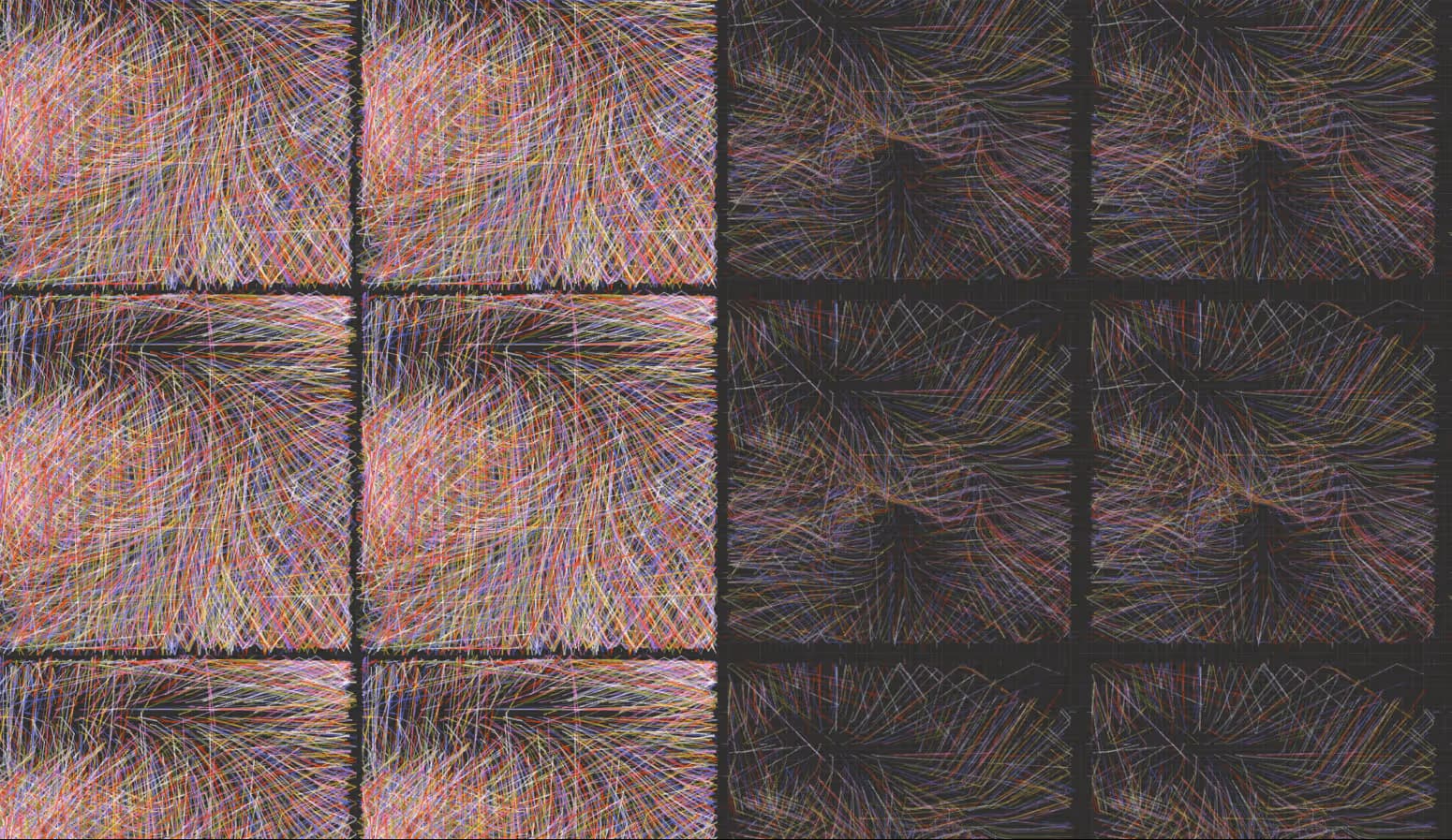
Later, I added the ability to create trails - delicate tails left behind by the shapes. The code started literally "drawing" across the canvas, leaving marks like Crayola crayons, but in an entirely new, generative form.
Final thoughts
I believe that experimenting with generative art carries enormous potential and truly unlocks creativity. We create a set of rules, the code interprets them - and suddenly something happens that exceeds our expectations.
Over time, I also started experimenting with combining generative art and typography, which opened up a completely new creative territory - one I'll be writing about more, because I feel like that's where something truly special is beginning for me.
To wrap up, a few thoughts for anyone who wants to give it a try:
- Start with simple tools - I recommend Processing or p5.js. Even without programming experience, you'll find tons of great tutorials and a welcoming community.
- Start small. Big, complex visions often fall flat when you don't yet know how to get there. Break the project into smaller stages - it lets you learn faster and see progress.
- Show your work. Even if it feels basic - post it on social media. Simple things often make the biggest impression.
- Find your area of exploration. Maybe it's shapes, motion, 3D, typography, or color. Whatever genuinely pulls you in will carry you forward.
And remember - generative art isn't just about code and rules. It's a way of thinking: openness to process, to mistakes, to chance.
Bibliography
- Mansion, M. (2023). On Algorithmic art - Creative Pinellas.
- Generative Art: 50 Best Examples, Tools & Artists (2021 GUIDE) - AIArtists.org.
- Zhang, Y., & Funk, M. (2021). Coding art: The Four Steps to Creative Programming with the Processing Language. Apress.
- What is Generative Art? (2024). Avant Arte.
- Dmitri Cherniak - Collaborations with Avant Arte. (2024).
- Principles of Generative Art & Algorithmic Design - Fiveable.
- Greenfield, G. (2012). Generative art: a practical guide using Processing, by Matt Pearson. Journal of Mathematics and the Arts.
- Zafeiriou, S. (2024). Generative Art for Beginners: 10 Essential Techniques.
- Goodchild, A. (2024). What is Generative Art? - Amy Goodchild.